We’ve all seen it: a finished image, a slick reel, or a polished design drops online, looking like it took five seconds of effortless magic. Nowadays, the common assumption is: „Type in a prompt, let the tools do the rest, call it a day.“
Real life looks completely different.
Turning a raw idea into something actually worth showing off takes a ton of invisible groundwork:
- Wrestling with the details: Whatever tools you use, bringing an exact vision from your head into reality demands patience. Mood, lighting, posing, and style all have to align. It often takes 20 to 30 iterations before you are in control of the outcome, not the software.
- Proportions and tricky interactions: The moment a concept gets complex—specific poses, extreme scale differences, or characters interacting—things go sideways fast. Fixing awkward anatomy, sorting out hands, tweaking angles, and ironing out weird glitches is pure manual labor.
- The final polish: A raw render is never the final product. There’s cleanup, removing artifacts, adjusting colors and contrast, and cropping everything into the right aspect ratio.
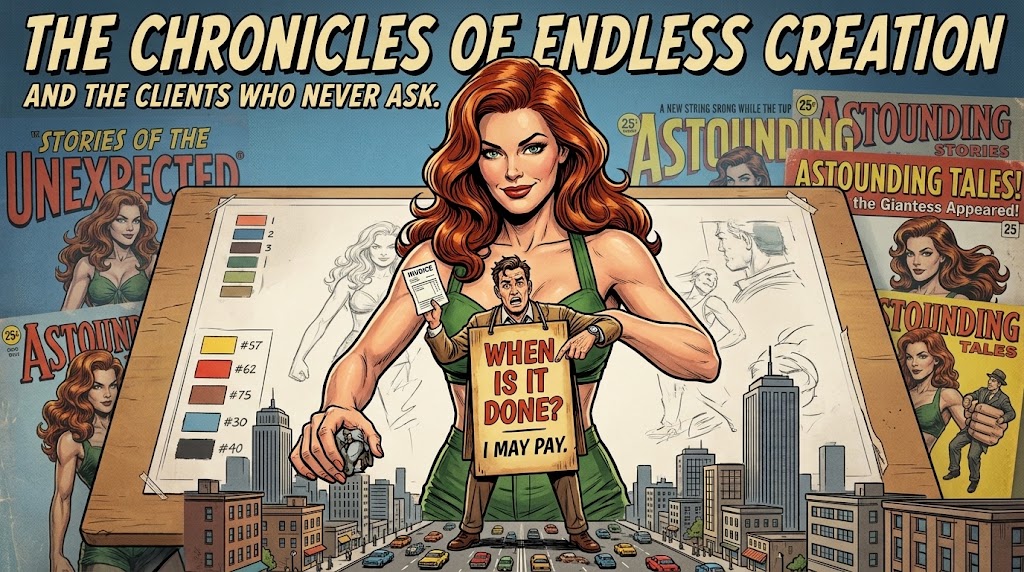
- The „Classic Client“ experience: And then there’s that special breed of person: they spend hours pitching you their „epic vision“ down to the most minute detail, followed by the legendary line: „Just whip it up, let me look at the final result, and if I like it, maybe I’ll pay.“ Naturally, they also message you every two hours asking if their project is done yet. Because creativity, skill, and time are free, right?
Modern tech can speed up certain steps, but the real work—structuring concepts, fine-tuning for hours, curating, and having an eye for detail—remains genuine craft, time, and a serious test of patience.
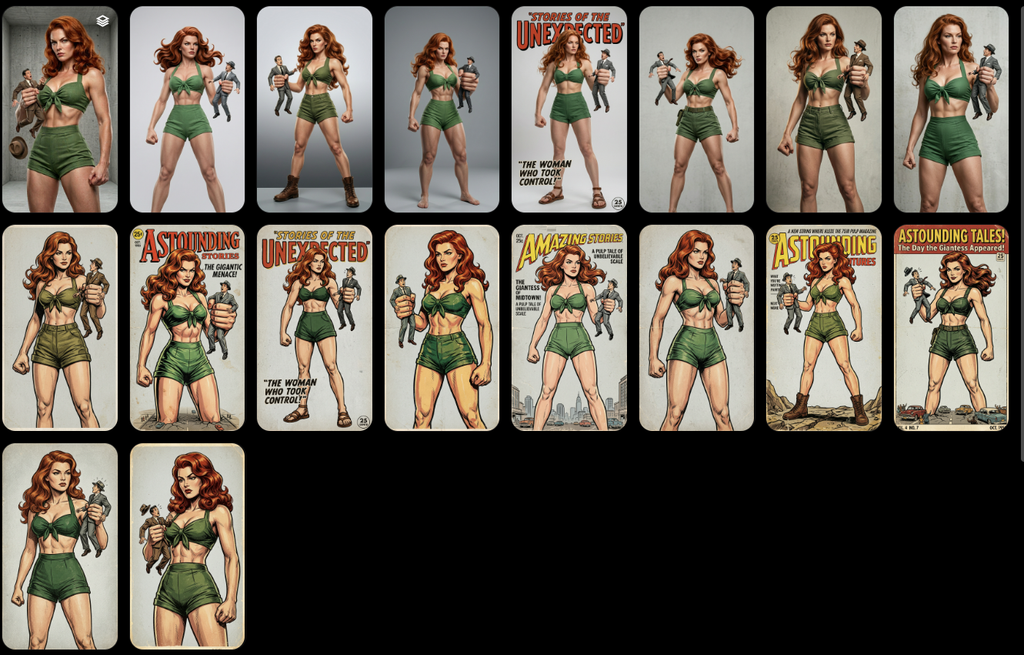
From First Draft to Final Piece: The Invisible Iteration Process
This screenshot captures the reality behind what looks like a single generated image: it took over 15 iterations and fine-tuning steps to land the exact vision.
- Top Row (Realism & Pose Exploration): Early tests focused on posture, scale differences, and how she holds the miniature man. The initial renders were heavily photorealistic, but felt too sterile and missed the vintage charm.
- Middle & Bottom Rows (Comic Style & Cover Layouts): Pivoting towards a 1950s pulp comic aesthetic. This phase involved testing cover typography (“Astounding Stories”, “Stories of the Unexpected”), dialing in ink linework, comic-book crosshatching, color palettes, and miniature street elements.
- Fixing Anatomy & Proportions: Nearly every iteration required correcting hands, the grip on the small character, and facial expressions until the scale and retro vibe clicked perfectly.